Old Little Belt Bridge (Gamle Lillebæltsbro): 7,000 m² of new waterproofing on the 1935 bridge
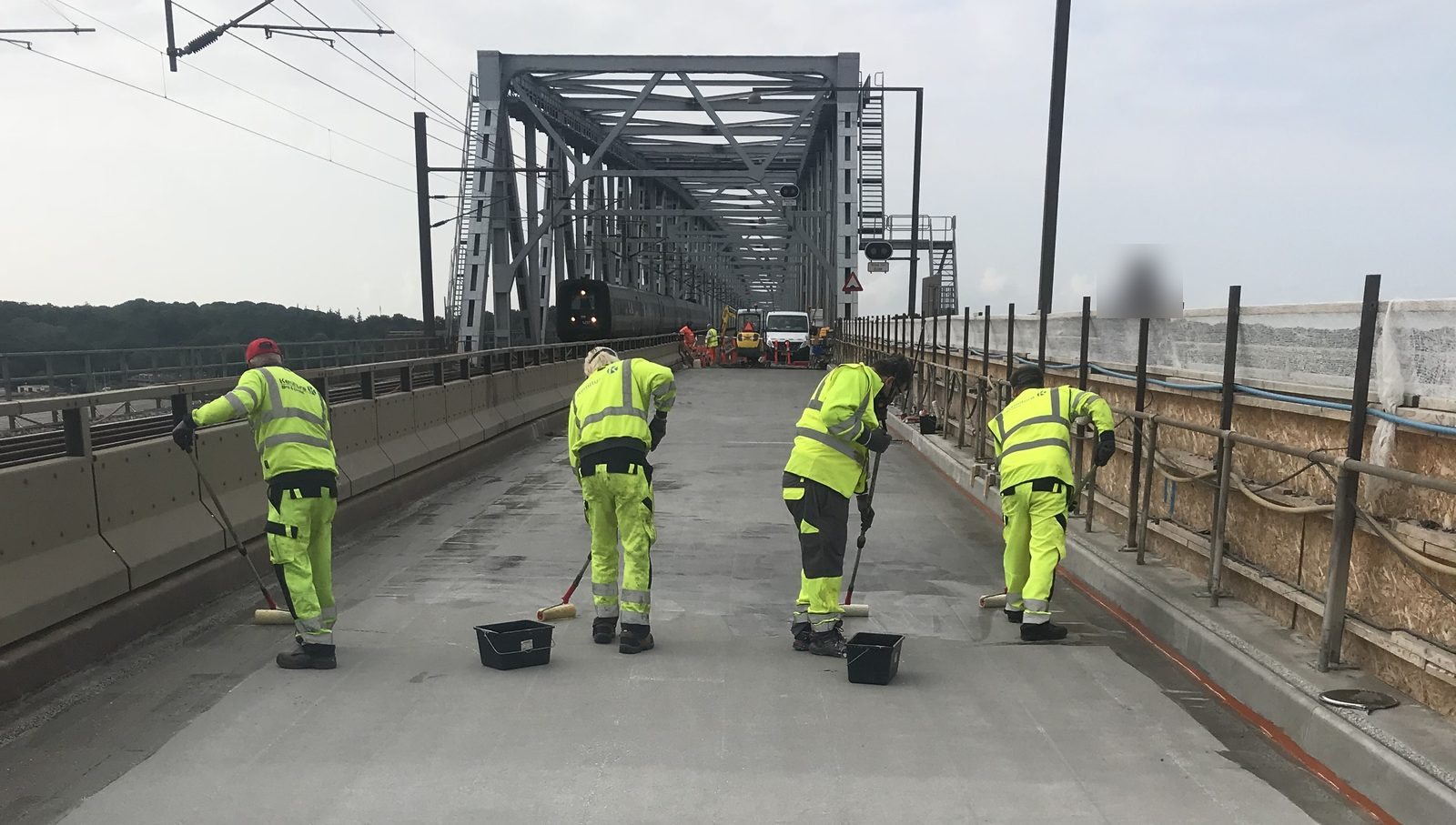
The Old Little Belt Bridge (Gamle Lillebæltsbro) from 1935 carries both road and railway across the Little Belt. When the carriageway was due for renovation, KBT, then Kemitura Bro & Tunnel, applied approx. 7,000 m² of new waterproofing for the Danish Road Directorate (Vejdirektoratet), with Arkil as main contractor. The work was carried out section by section over two seasons, August–September 2018 and July–August 2019, while trains ran on the adjacent track.
The project
| Scope | New waterproofing of the carriageway on the Old Little Belt Bridge, between the railway track and the cycle path |
|---|---|
| Client | The Danish Road Directorate (Vejdirektoratet) |
| Main contractor | Arkil |
| Carried out by | Kemitura Bro & Tunnel AS (today KBT Waterproofing) |
| Period | 29 August – September 2018 and 17 July – 23 August 2019 |
| Extent | Approx. 7,000 m² of carriageway, divided into sections 1–63 plus ramp sections on the Jutland and Funen sides |
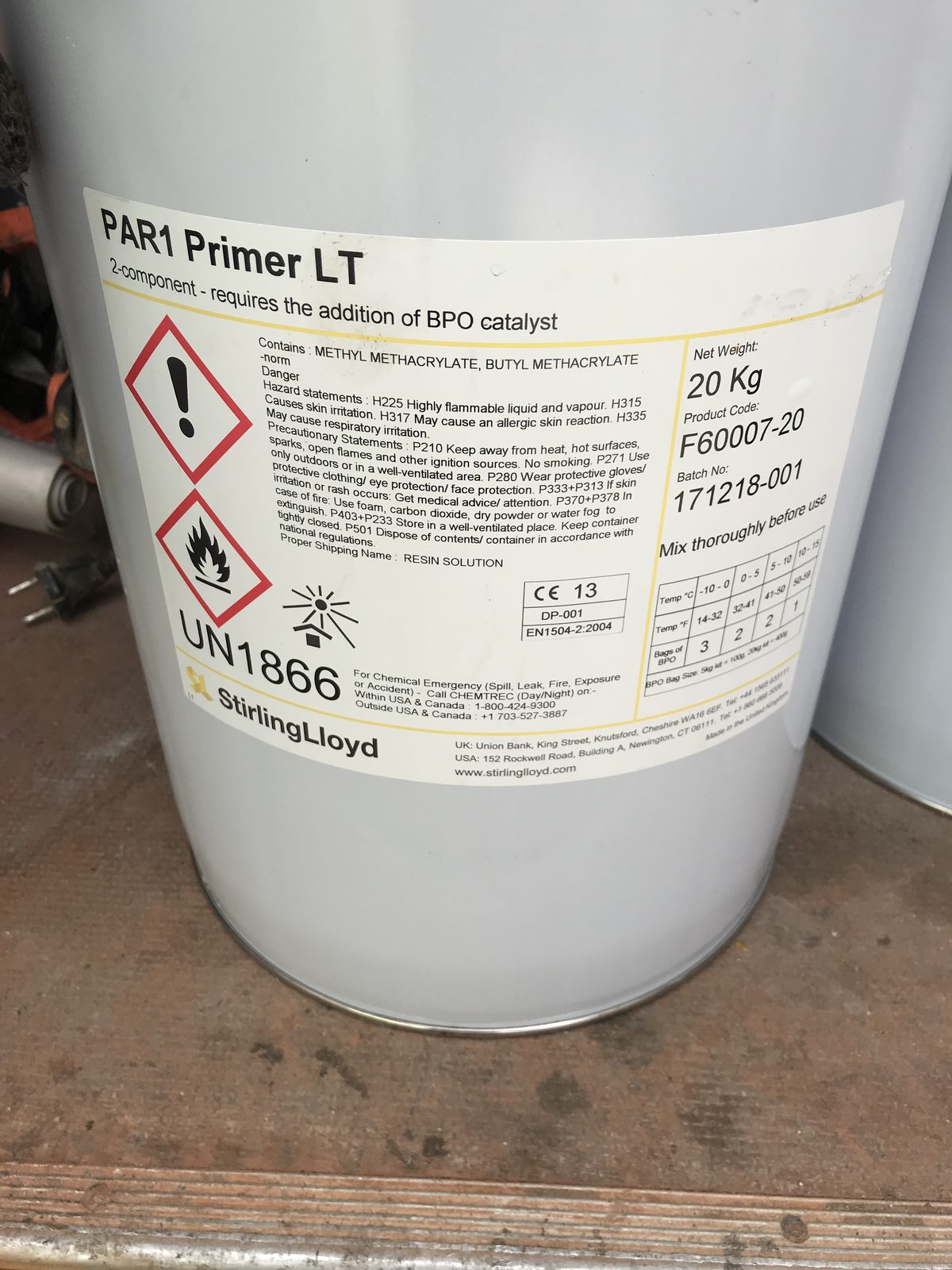
| System | PAR1 primer on concrete, Zed S94 primer on cast-in metal edges, Eliminator yellow and white, Bond Coat No. 3 as tack coat for the asphalt |
| Checks | Surface assessment, climate measurement, wet film checks with a comb gauge, pull-off tests, holiday test (spark test) of the entire area, air monitoring for MMA |
Section by section with trains on the adjacent track
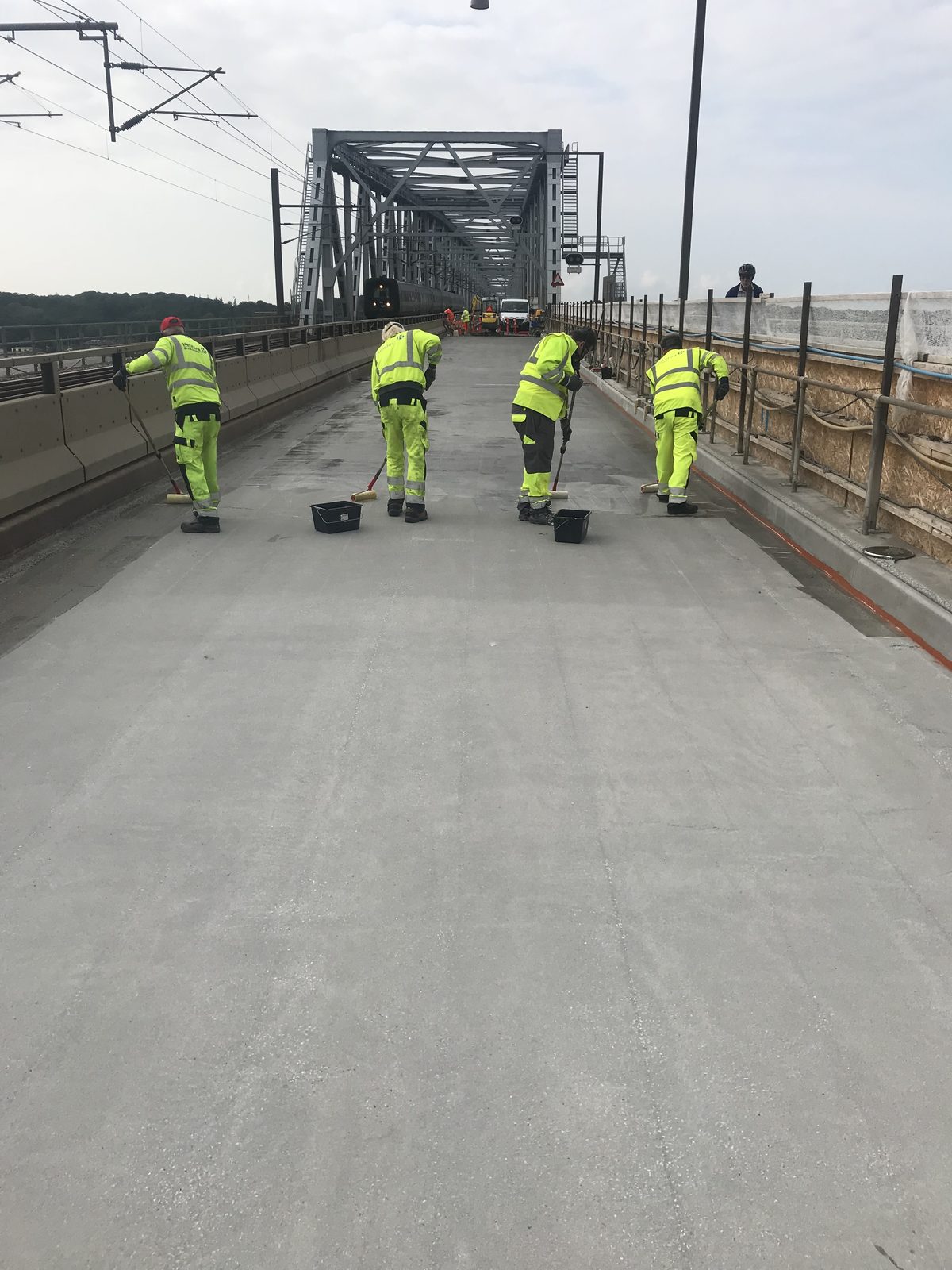
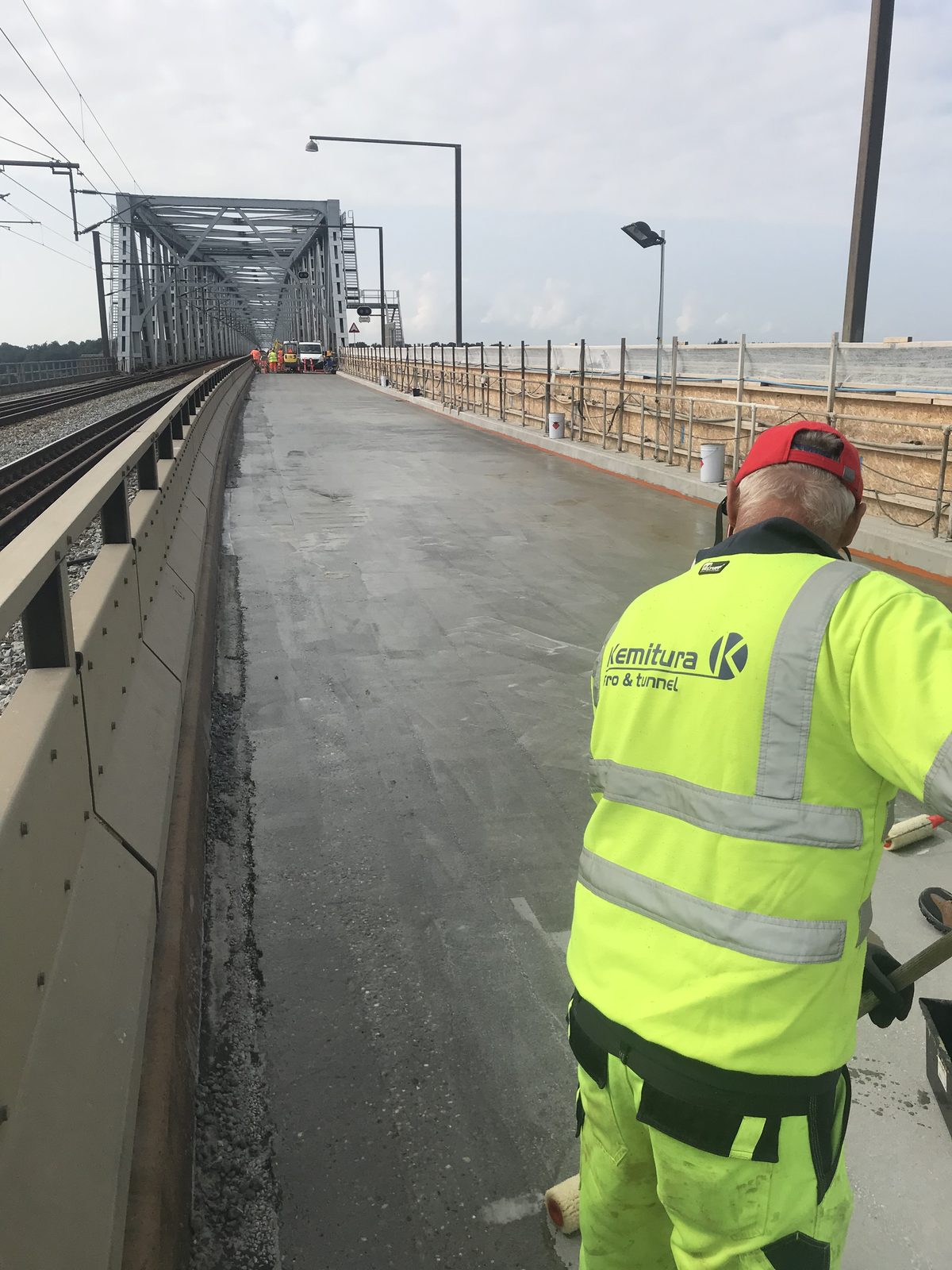
The carriageway lies between the railway track and the cycle path. It was divided into 63 sections on the bridge itself and a number of sections on the ramps at both ends, so that each section could be prepared, primed, sprayed and tested while the rest of the bridge and the track remained in operation. The substrate was swept and blown clean with compressed air and, where necessary, dried before the primer was applied, and the surface was assessed section by section.
The yellow and white membranes were sprayed in two layers and checked with a comb gauge as the work progressed. The total membrane thickness was measured at approx. 2.5–3 mm. Cast-in metal edges received Zed S94 metal primer, so that the membrane covers concrete and metal in one continuous film. Finally, Bond Coat No. 3 was applied as a tack coat for the asphalt.
Old concrete: what the pull-off tests tell us
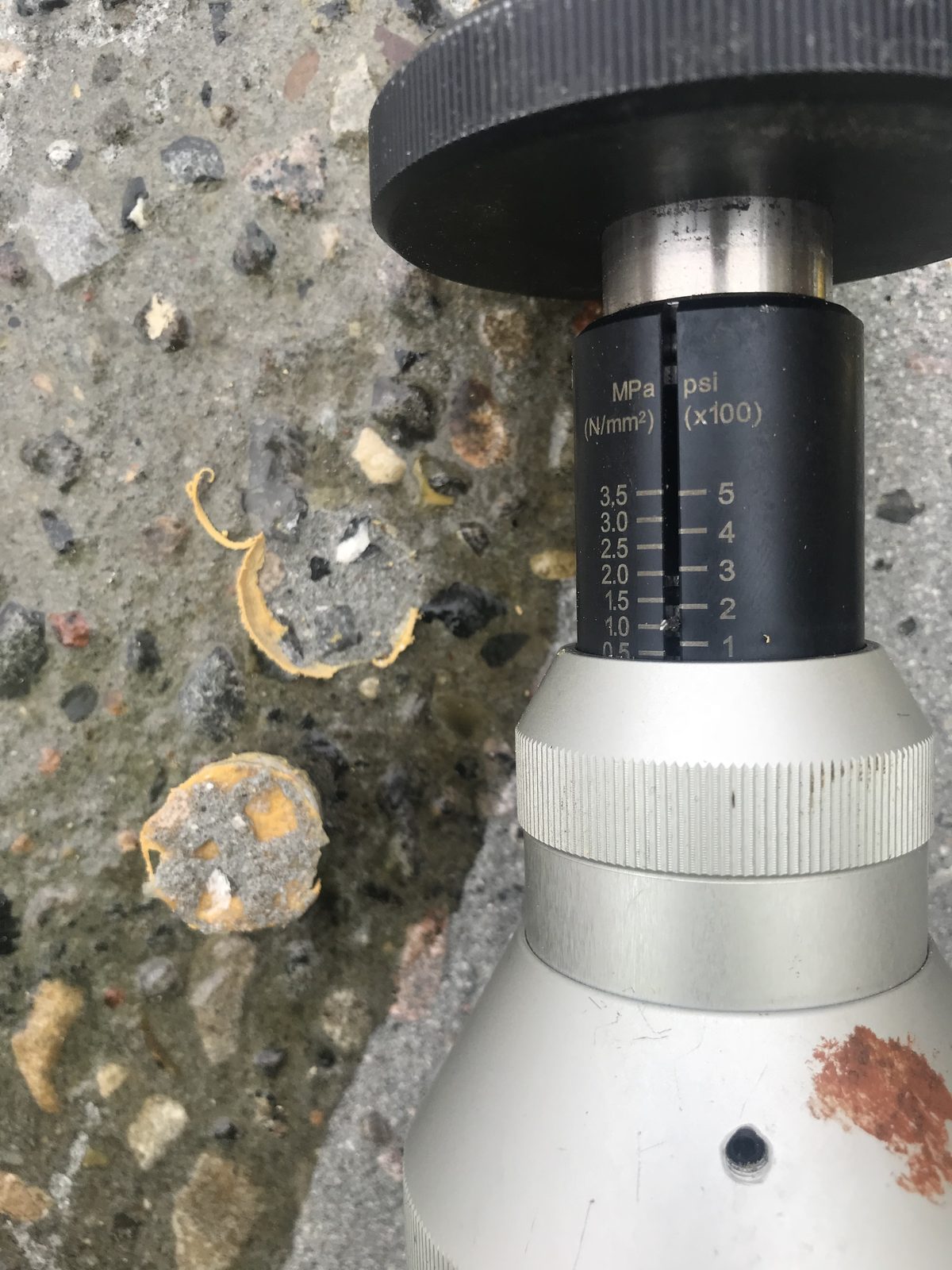
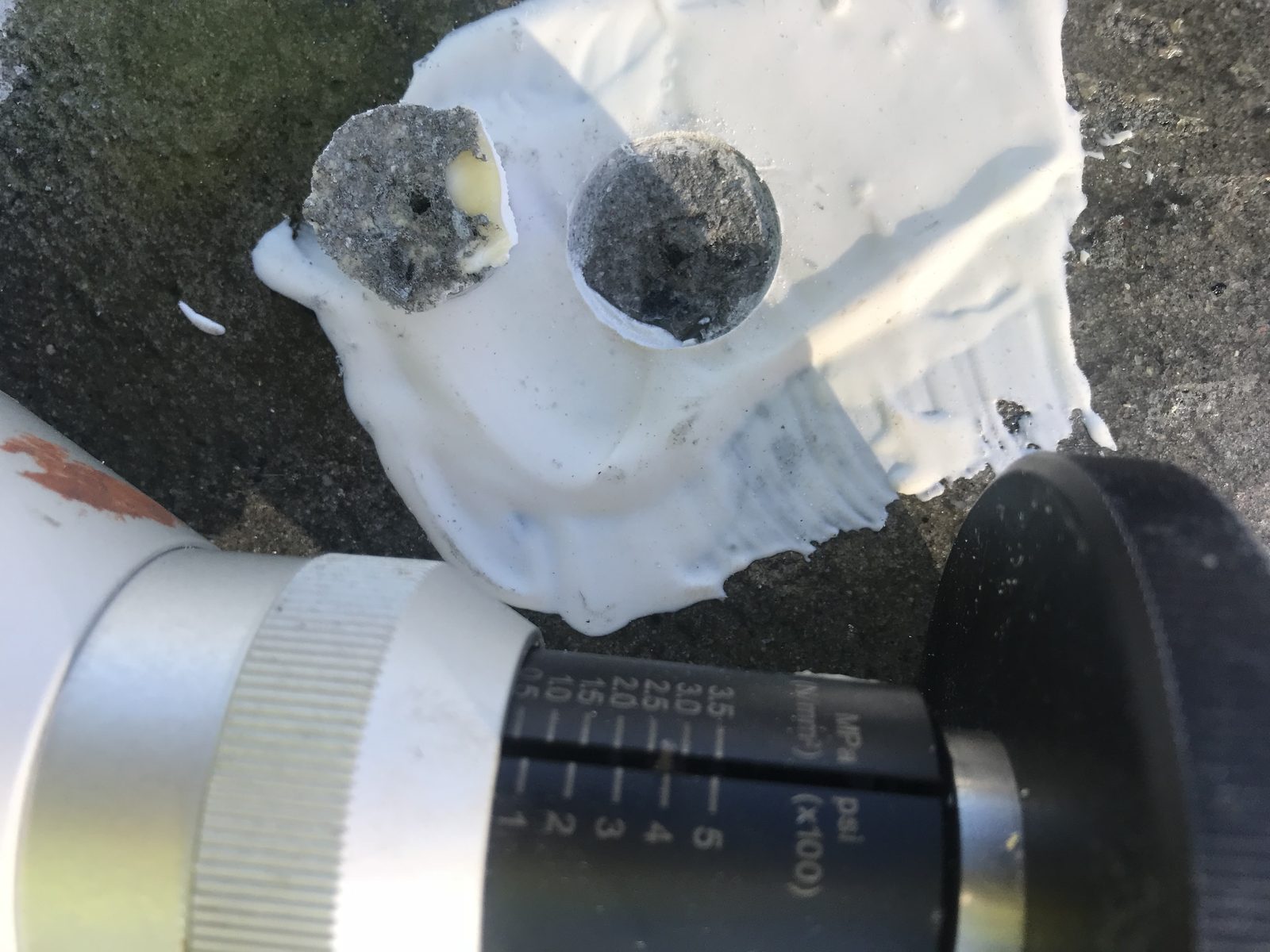
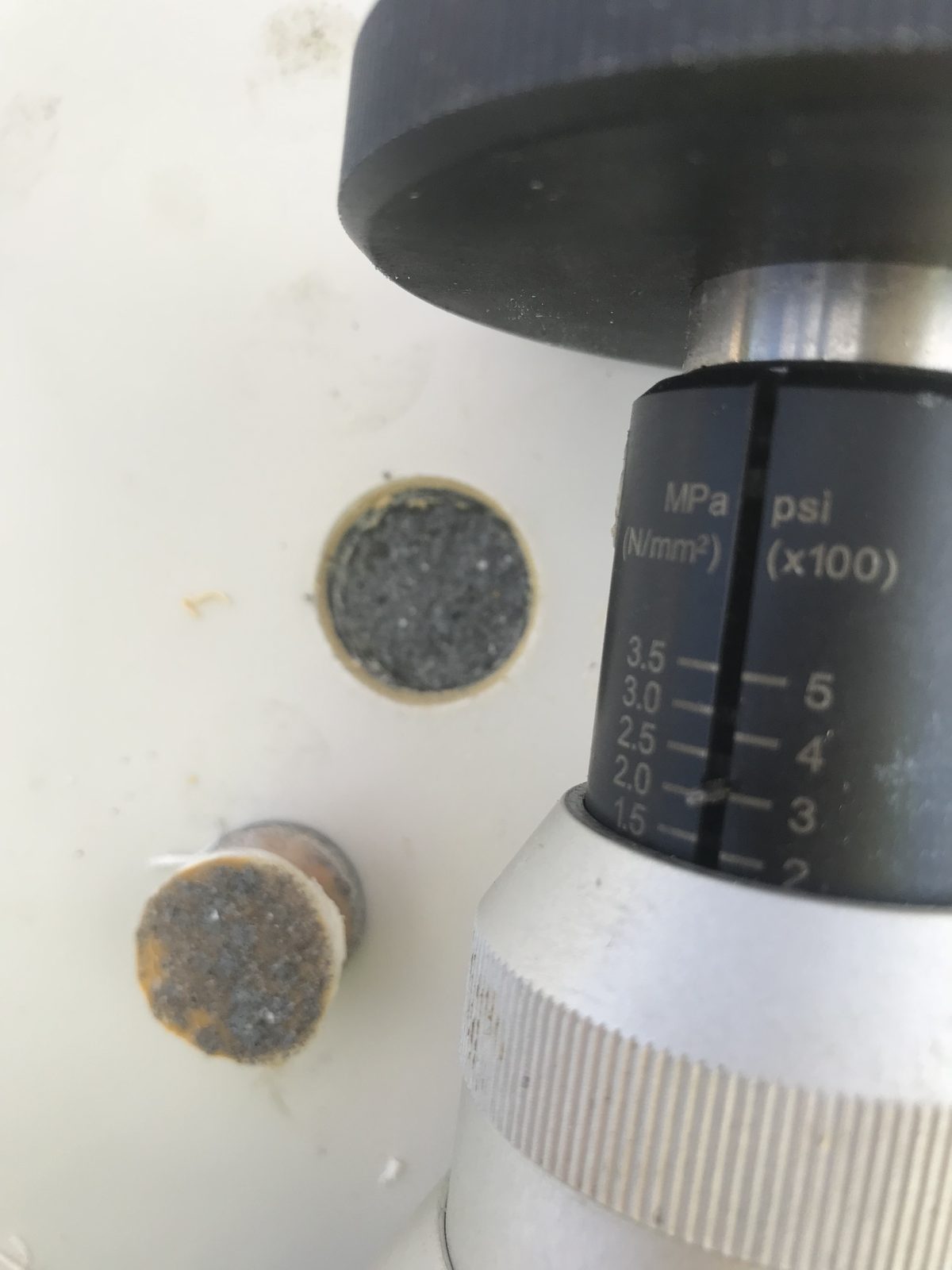
A bridge from 1935 does not have the same concrete surface as a new bridge, and the pull-off tests showed it. In the first season, in 2018, several tests on the finished membrane gave low values, but the failure was 100% in the concrete every time. In other words, the membrane adhered more strongly than the surface of the old concrete could hold: it was the concrete that gave way, not the bond. The results were presented to the Danish Road Directorate and accepted.
In 2019 the pull-off tests were typically 2.0–3.5 MPa, again predominantly with failure in the concrete. That is the pattern to look for: a high value is good, but it is the failure mode that shows whether the membrane is properly bonded.
Holiday test before asphalt
The entire finished membrane was holiday tested (spark tested) at 8 kV, the requirement at the time. Every pore the test found was repaired with the same material and retested before the Bond Coat and asphalt were applied. The MMA concentration in the air during spraying was measured and was below the limit. How the holiday test works →
Photos from the works
Frequently asked questions
What does it mean when a pull-off test gives a low value but the failure is 100% in the concrete?
It means the membrane adheres more strongly than the concrete surface itself can hold. On the 1935 bridge, some tests in 2018 gave low values, but the failure was 100% in the concrete every time. The results were presented to the Danish Road Directorate and accepted. In 2019 the tests were typically 2.0–3.5 MPa.
Can a carriageway be waterproofed while trains run alongside?
Yes. The carriageway was renovated section by section over two seasons while the adjacent railway track remained in operation. The spray-applied membrane cures in under an hour, so each section could be completed quickly.
How are metal edges handled on a concrete bridge?
With a metal primer. The cast-in metal edges received Zed S94 and the concrete PAR1. Eliminator then covers both substrates seamlessly.
Related pages
Contact us for a technical assessment
Whether it is a new bridge, an existing tunnel or a car park deck, describe the structure and we will get back to you within one working day. We answer in English, Danish and Norwegian.
Write to us directly and a specialist will reply, not a system. The email opens with the information we need, so you get a useful answer quickly.
Send an email →Or call: +45 47 17 18 55 ·
We do not use contact forms. Your email is handled as described in our privacy policy (in Danish).